7 Steps to Handle Attic Water Damage from a Roof Leak
Use this as your roadmap. The order matters.
- Confirm the leak is active
- Stop water from spreading downward
- Document everything for insurance
- Get a professional moisture assessment
- Remove saturated insulation and debris
- Dry the structure to standard
- Repair the roof and restore the attic
1. Confirm the Leak Is Active
Not every stain means current water. Some are old. Some are condensation. Look for these clues that the leak is live:
- Wet or darkened wood on rafters and decking
- Sagging, compressed, or clumped insulation
- Water dripping or beading after rain
- A musty smell that gets worse on humid days
- Rust on nails poking through the roof deck
- Fresh staining on the ceiling drywall below
If you see two or more of these, treat it as active. Our guide to spotting hidden water damage early covers what is easy to miss.
One quick test: press a paper towel against a suspect rafter. If it picks up moisture, the leak is current. Dry stains with crisp edges are usually old. Stains with soft, expanding borders are still feeding.
2. Stop Water from Spreading Downward
You cannot fix the roof in the rain, but you can limit the path the water takes. Quick containment steps:
- Place a bucket or tarp under the active drip
- Move stored items (boxes, holiday decor, photos) out of the splash zone
- Pull back wet insulation in a small radius so the deck can breathe
- Punch a small relief hole in a bulging ceiling below to drain it into a bucket
- Shut off attic-mounted HVAC if water is near the unit
Do not climb on the roof in wet conditions. Wait for the weather, or call us.
3. Document Everything for Insurance
Photos and notes protect your claim. Capture this before anyone touches anything:
- Wide shots of the attic showing the leak area
- Close-ups of stained wood, wet insulation, and drips
- The ceiling below from multiple angles
- Any damaged personal items in the attic
- The date, time, and weather conditions
- Receipts for tarps, buckets, or emergency materials you buy
If you are unsure how the claims process works, our walkthrough on filing a water damage insurance claim spells out what adjusters expect.
A few extra tips that speed up claim approval:
- Shoot short video walkthroughs in addition to stills
- Note the brand and age of damaged items when possible
- Save the weather report for the day of the storm
- Keep a written log of every call, email, and visit
- Do not throw away damaged materials until the adjuster signs off
4. Get a Professional Moisture Assessment
This is where a free Russiaville Water Restoration assessment pays off. We arrive in most cases within 2 hours and bring tools your eyes cannot replace:
- Pin and pinless moisture meters for wood and drywall
- Thermal imaging cameras to find cold wet spots behind finishes
- Hygrometers to measure attic humidity and dew point
- Borescopes for tight cavities and soffit voids
- Category and class determination per IICRC S500
You get a written scope: what is wet, how wet, and what has to come out.
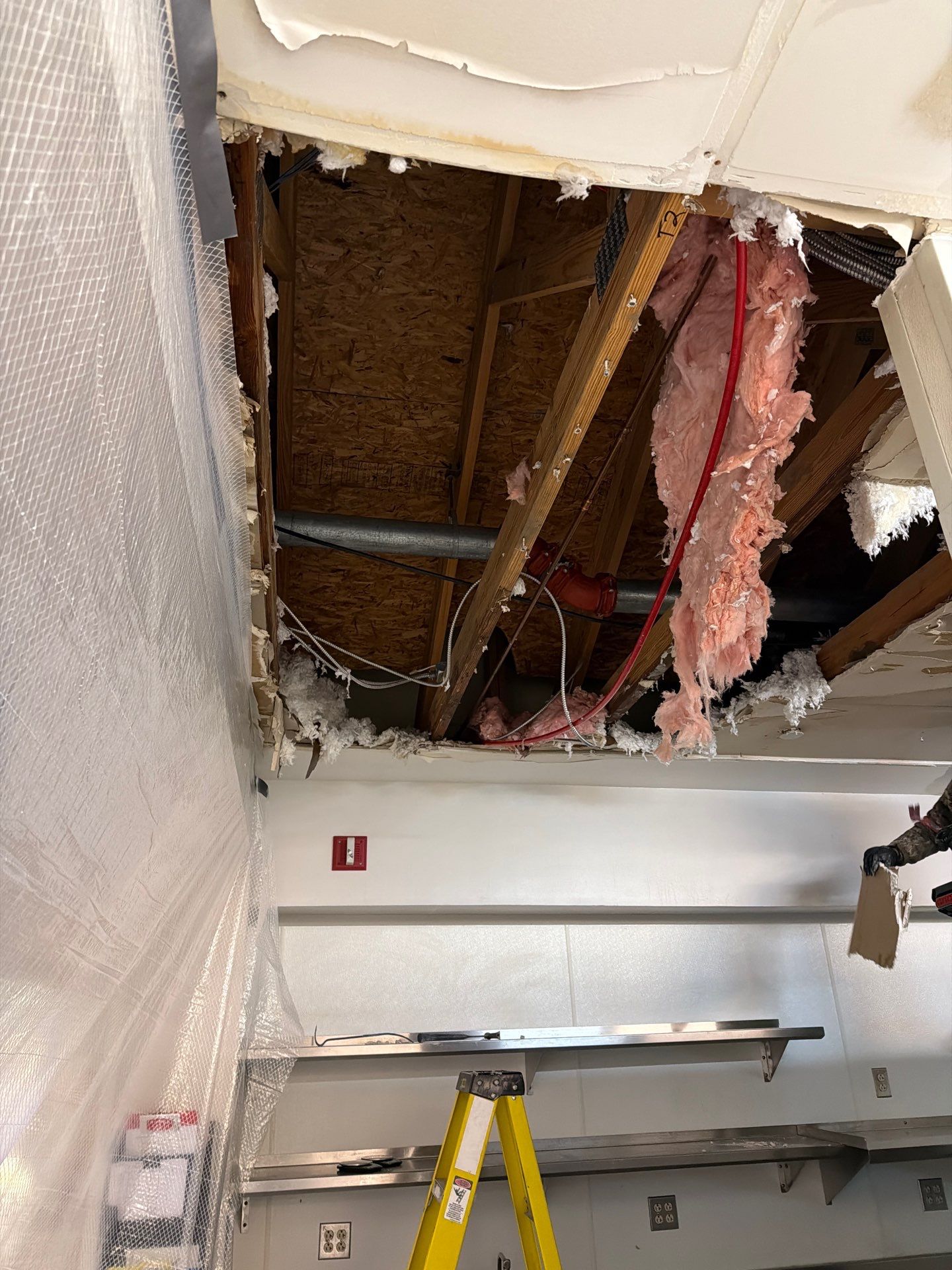
5. Remove Saturated Insulation and Debris
Wet insulation does not dry well and loses R-value fast. What typically gets removed:
- Soaked fiberglass batts in the leak zone
- Blown cellulose that has clumped or wicked moisture
- Contaminated vapor barriers
- Cardboard, paper, and stored organics within the wet footprint
- Any material showing visible mold growth
If mold is already present, we shift to containment protocols under S520. That changes the scope but not the timeline dramatically.
6. Dry the Structure to Standard
Drying an attic is not just running a fan up there. Pros set up a controlled environment:
- Air movers aimed at rafters, decking, and joists
- Low-grain refrigerant or desiccant dehumidifiers sized to the cubic footage
- Daily moisture readings logged against drying goals
- Containment if mold spores are airborne
- HEPA air scrubbers in the work zone
Curious how long this takes? Our overview of professional drying timelines breaks down typical day counts by category and structure type.
7. Repair the Roof and Restore the Attic
Drying without repairing the roof is a temporary win. Common roof-side culprits we see in Russiaville:
- Cracked or missing shingles
- Failed flashing around chimneys, skylights, and vent pipes
- Worn pipe boot gaskets
- Ice dam damage at the eaves
- Nail pops backing out of the deck
- Clogged gutters forcing water under the drip edge
Once the roof is solid and the structure reads dry, we rebuild: new insulation to code, vapor barrier, drywall patching on the ceiling below, paint, and any trim work that came out.
Hidden Costs of Ignoring an Attic Leak
People put off attic repairs because the space is out of sight. Here is what builds up while you wait:
- Mold colonies on rafters and sheathing
- Rotted decking that needs full sheet replacement
- Compromised trusses and structural sag
- Stained, sagging ceilings in bedrooms below
- Higher energy bills from wet, compressed insulation
- HVAC damage if attic equipment gets wet
- Pest infestations drawn to moisture
A small leak that costs a few hundred dollars to address in week one can balloon into a five-figure rebuild after six months of neglect. The math almost always favors early action.
Common Mistakes Homeowners Make
We see the same missteps over and over in Russiaville attics. Avoid these:
- Spraying bleach on moldy wood and assuming it is fixed
- Stuffing dry insulation on top of wet insulation
- Patching the ceiling below before drying the attic above
- Running a single box fan for a week and calling it dry
- Tossing damaged items before the adjuster sees them
- Ignoring soft spots on the deck when walking the attic
- Sealing soffit vents to "stop the draft" and trapping moisture
Each of these turns a manageable repair into a bigger project. The fix is almost always cheaper when you skip the shortcuts and follow the steps in order.
When to Call Russiaville Water Restoration Right Away
Some situations cannot wait for a sunny weekend. Call now if you see:
- Active dripping during or after rain
- Visible mold on rafters or decking
- A sagging or bulging ceiling below the attic
- Water near attic electrical or HVAC
- Musty smells throughout the upper floor
- Recent storm, hail, or wind event with missing shingles
We give you a straight answer at the assessment. If the fix is a $300 patch and a bag of insulation, we will tell you. If it is a full mitigation, you get a written scope and photos to back it up.
Seasonal Triggers to Watch in Russiaville
Roof leaks rarely happen out of nowhere. Certain conditions push borderline roofs over the edge:
- Heavy spring rains after a dry winter
- Summer hail that bruises shingles without breaking them
- Fall leaf buildup clogging gutters and valleys
- Winter freeze-thaw cycles lifting flashing
- Wind events peeling back ridge caps
After any of these, take ten minutes to walk the attic with a flashlight. Catching a stain the day it appears is the difference between a quick repair and a full mitigation job.